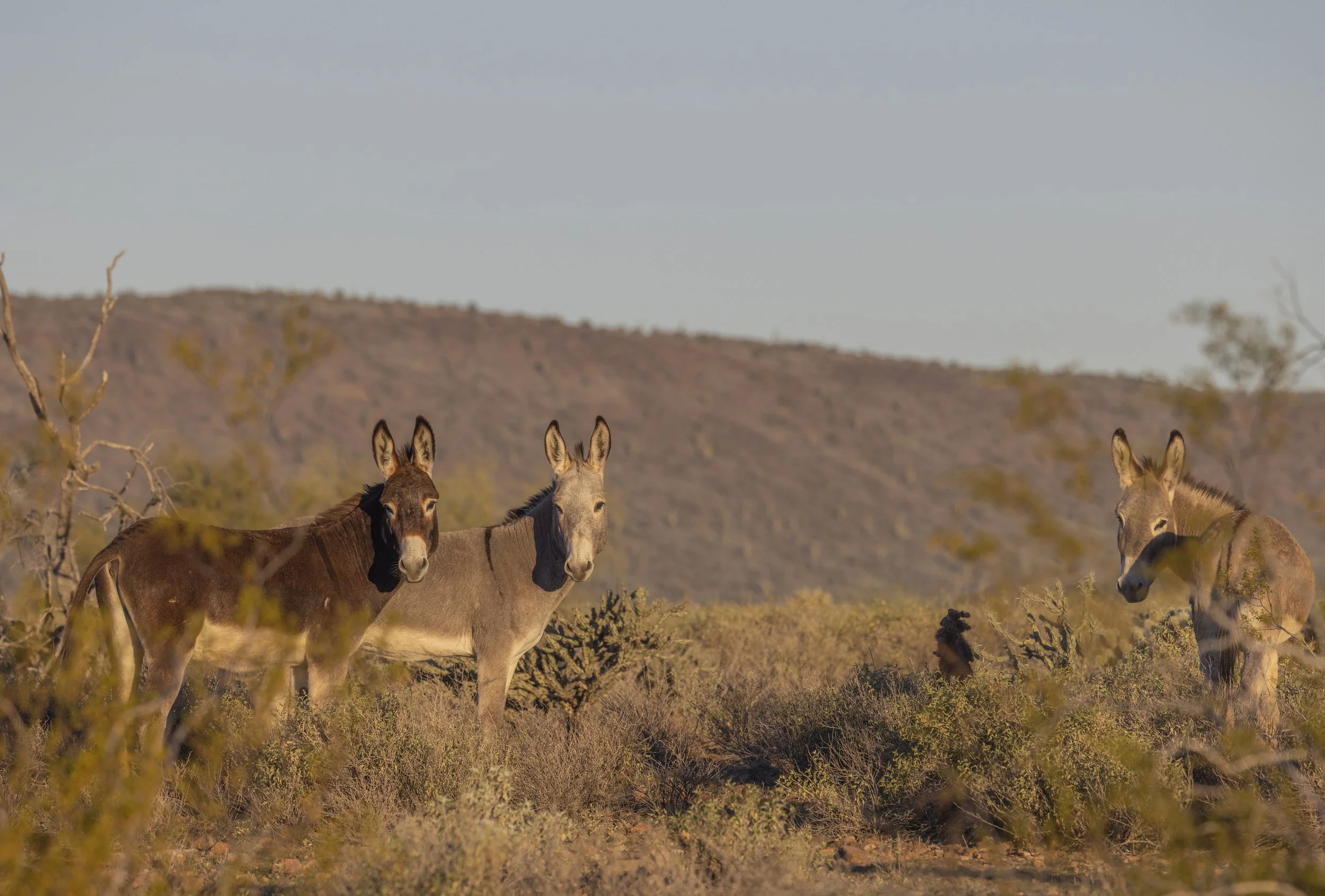
Wild Burros
Wild Burros: America’s
Forgotten Equine
Wild burros are the free-roaming descendants of domestic donkeys that once played a critical role in building the American West, yet their story is often overlooked.
From the deserts of Southern California to the Rocky Mountains, these donkeys helped shape the frontier for more than four centuries.
Read on to learn more about their history, the challenges they face today, and why they still matter.
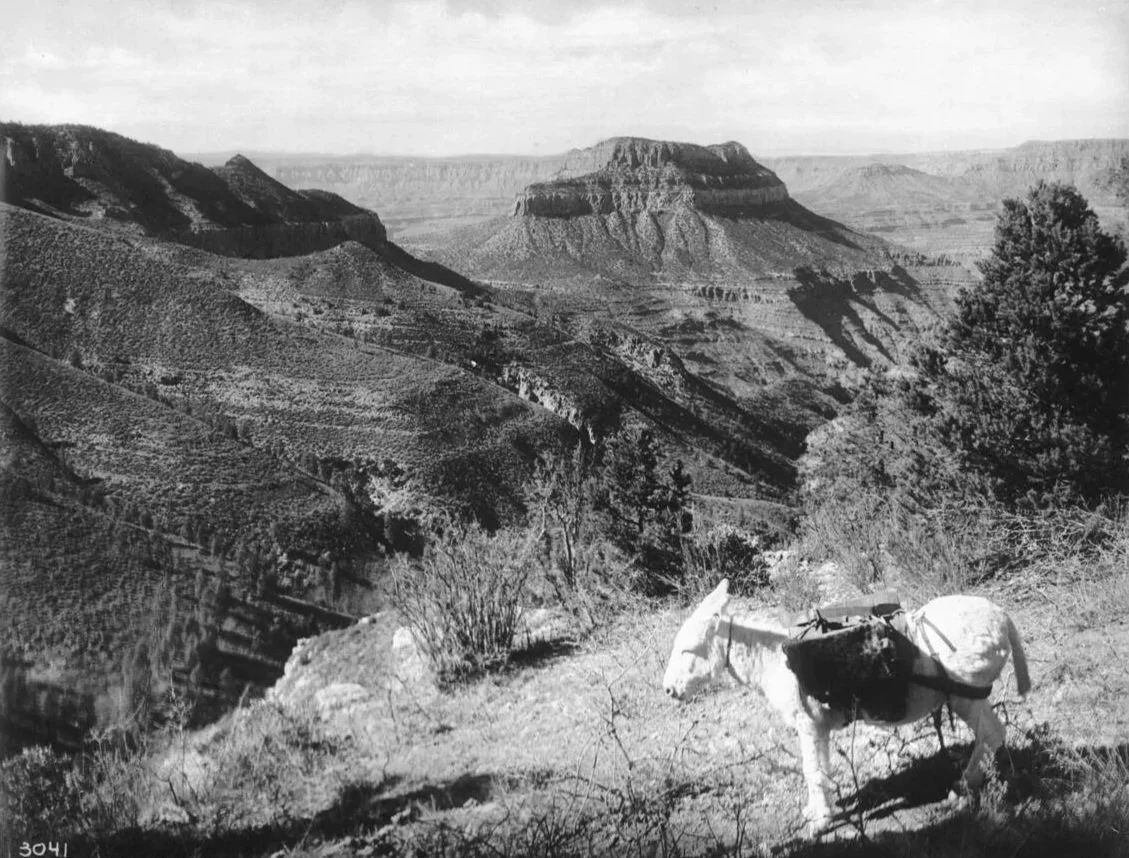
White pack burro standing on a slope at the Grand Canyon, ca.1900
Courtesy of University of Southern California Libraries and California Historical Society.
Working Donkeys in the West
Donkeys were first introduced to the American Southwest by Spanish explorers during the 1500s. Over the centuries that followed, they became some of the most important working animals in the West, transporting supplies for missionaries, ranchers, settlers, miners, and soldiers through rugged mountainous and desert landscapes beyond the reach of wagons.
Their significance only increased with the California Gold Rush beginning in 1848, when donkeys became indispensable for transporting water and supplies to remote mining camps. Compared to horses, donkeys’ sure-footedness on steep, rocky terrain and ability to thrive in harsh arid climates made them uniquely well-adapted to the mining frontier.
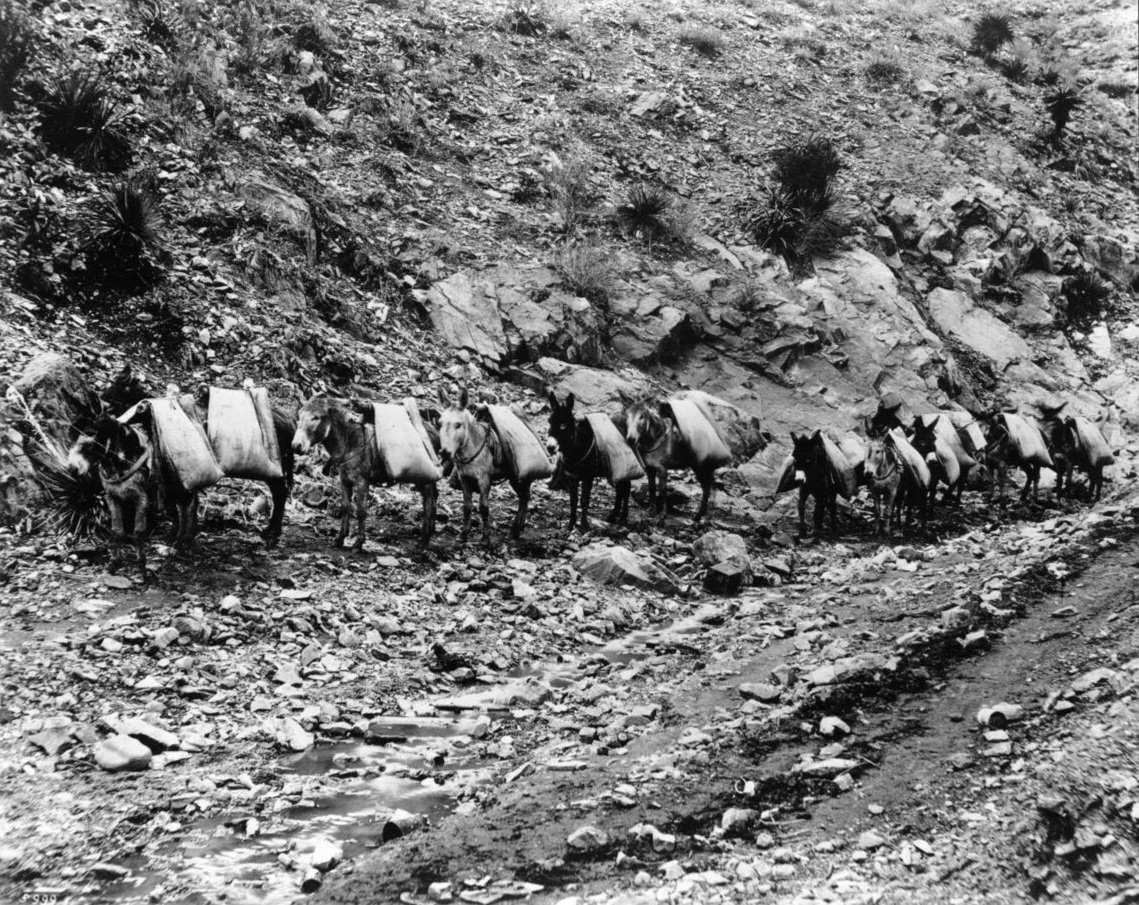
A burro train of water carriers, Bisbee, Arizona, ca.1900-1930
Courtesy of University of Southern California Libraries and California Historical Society.
Trusted Companions
Even during times when donkeys were considered the ultimate beasts of burden, historic photographs reveal another side of their story. From the late 1800s through the early 1900s, countless images capture the undeniable companionship, curiosity, and humor that donkeys brought to the people who lived and worked alongside them.
Their individual personalities, gentle nature, and steadfast affection earned them a reputation as trusted companions at home and on the trail. From family portraits and prospectors proudly posing beside their donkeys to playful images of donkeys wearing hats or wandering into saloons and cafés, it’s clear that donkeys held a meaningful place in many people's lives that extended far beyond the work they performed.
-
![]()
Man with two burros: postcard, captioned “When Shall We Three Meet Again”, ca. 1900-1915
-
![]()
Photograph of a man holding burro, 1900-1925
-
![]()
Photograph of five men with burros, Goldfield (Nev.), early 1900s
-
![]()
Photograph of a girl with burros, Goodsprings (Nev.), 1910s
-
![]()
Postcard of "The Boozy Burros" bar, 1905
-
![]()
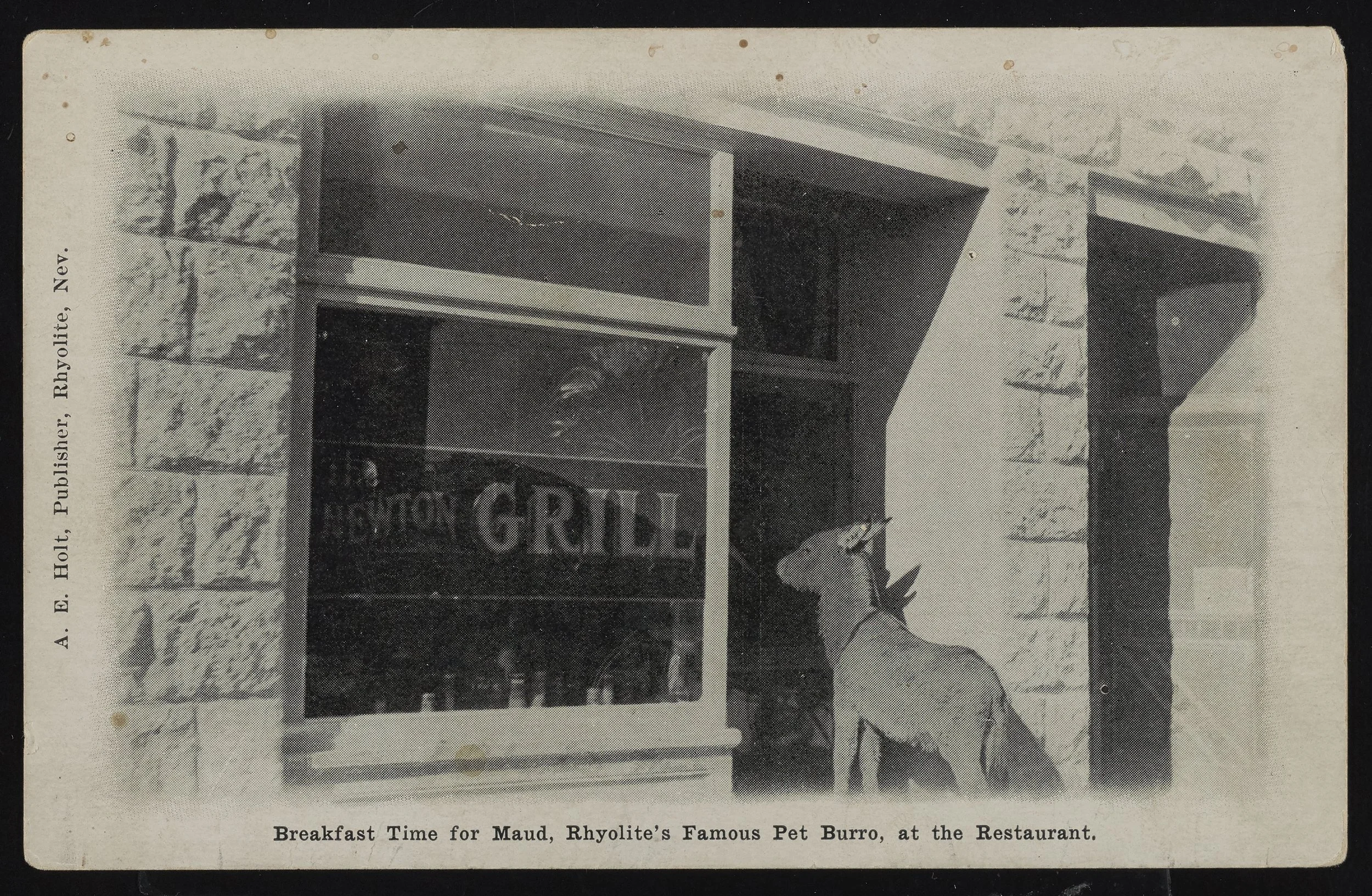
Rhyolite's famous pet burro, Maud, outside the Newton Grill: postcard, 1907
-
![]()
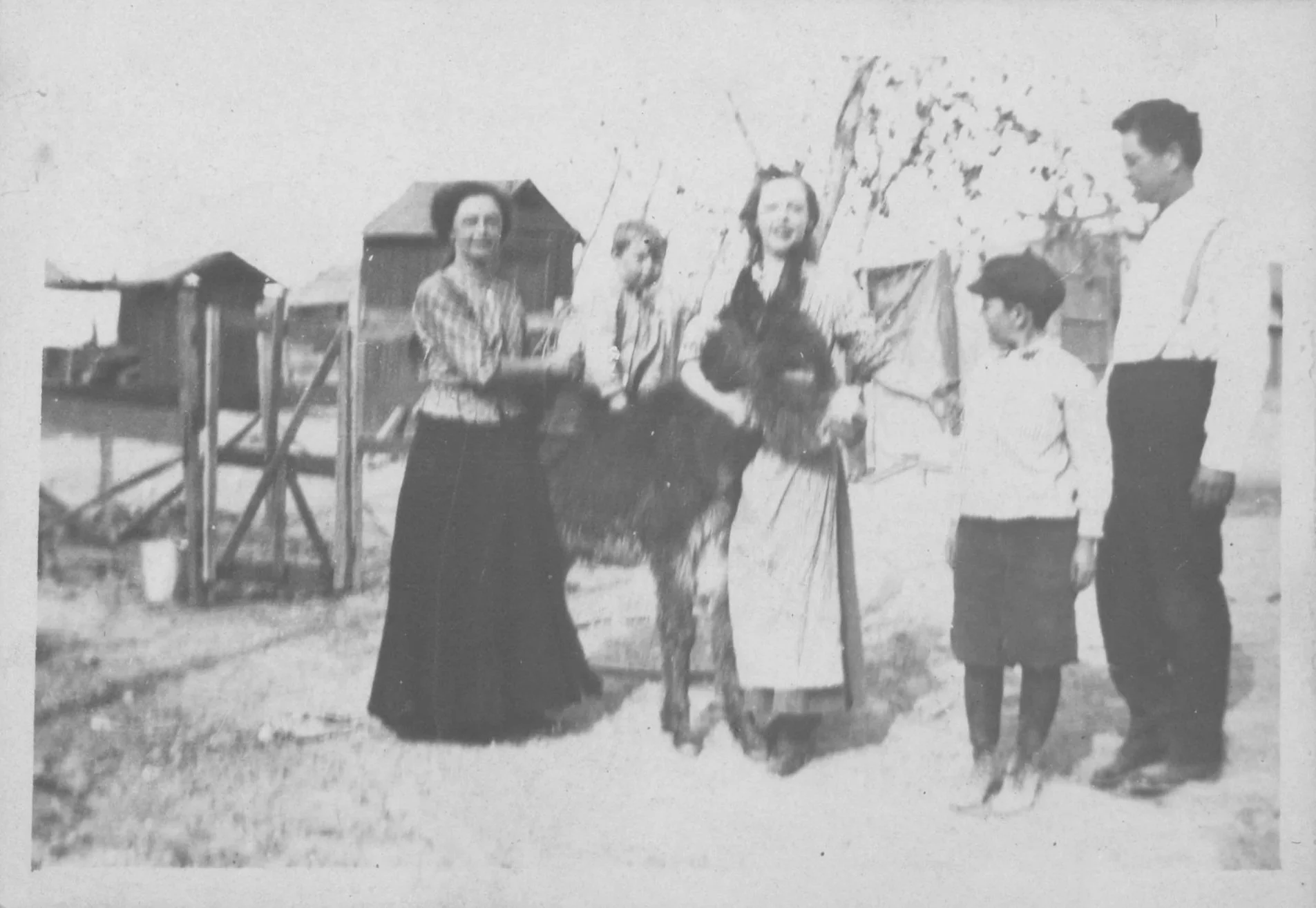
Black-and-white photograph of Harold Stocker with his family and neighbors, Las Vegas, ca. 1910-1915
-
![]()
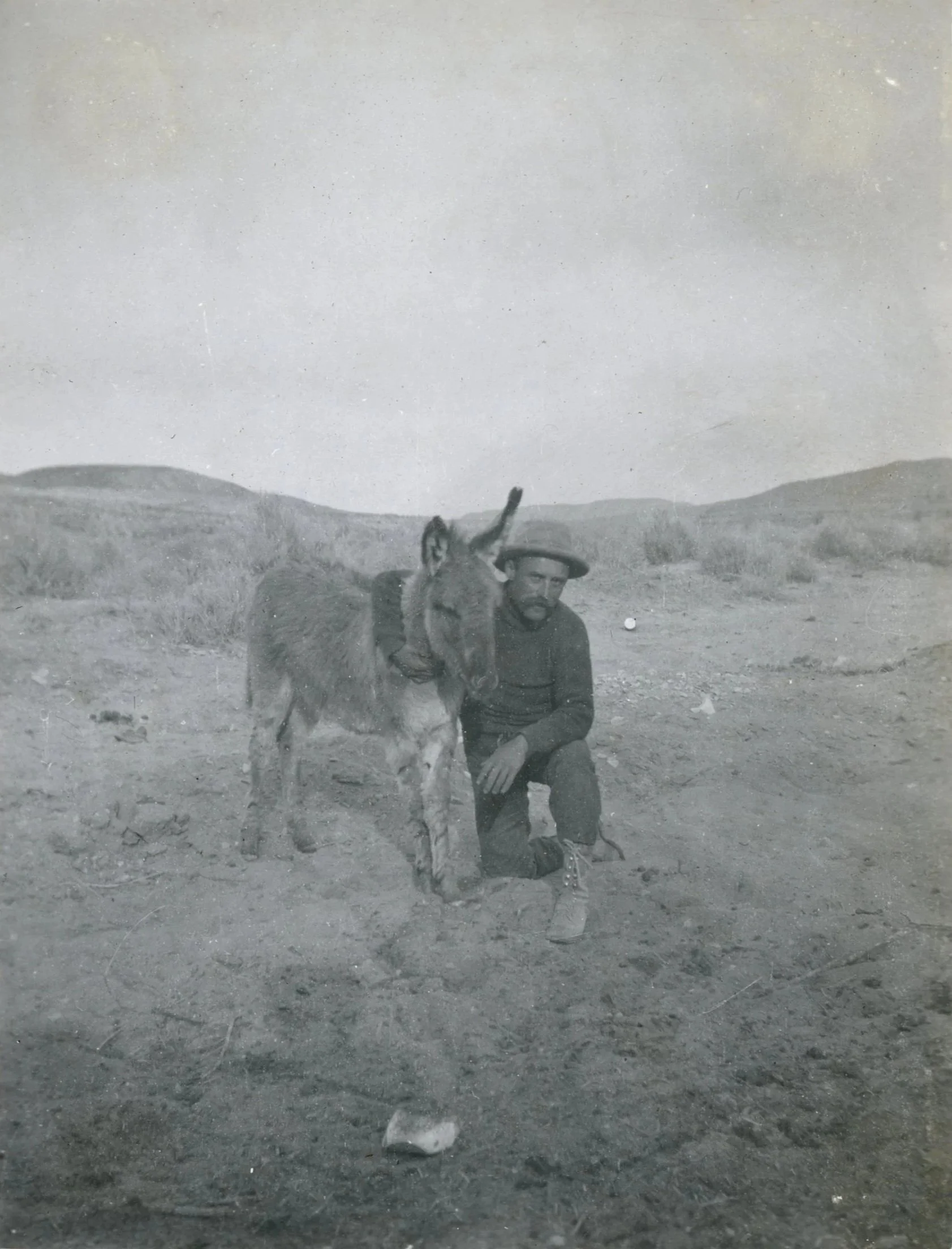
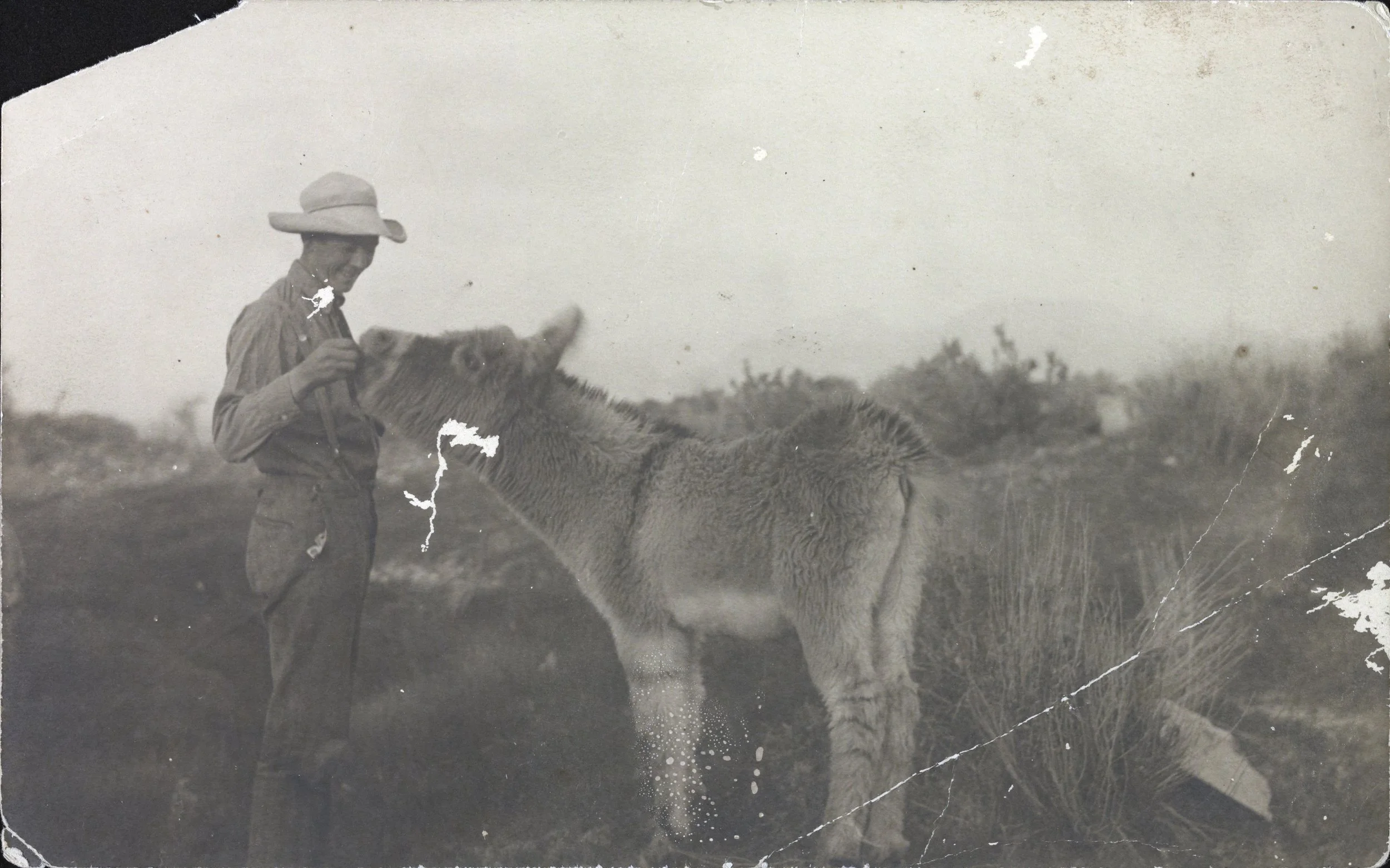
Photograph of a man and a small burro in the desert, 1900-1925
-
![]()
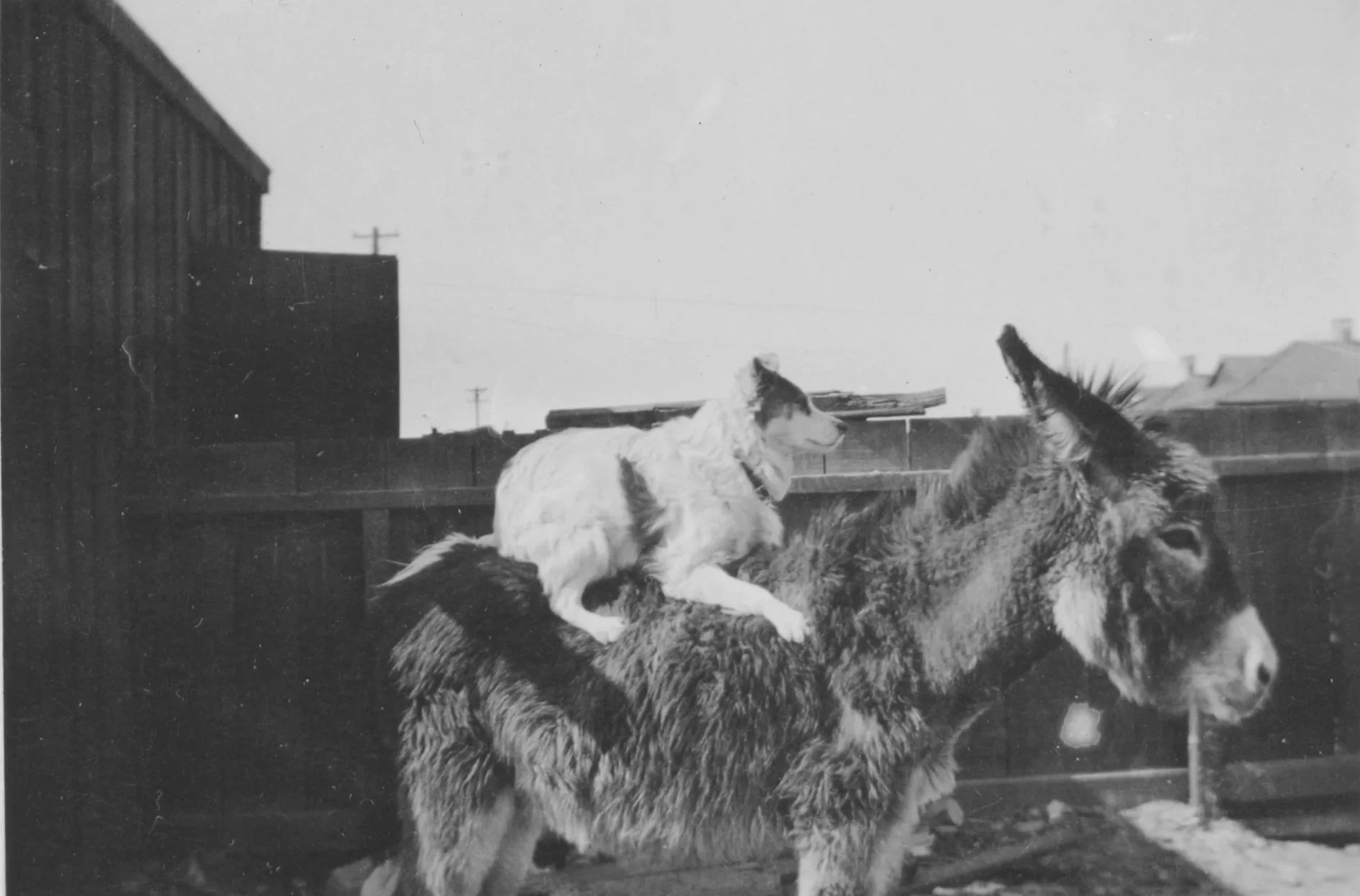
Photograph of a dog sitting on a donkey, Las Vegas, ca. 1920-1930s
-
![]()
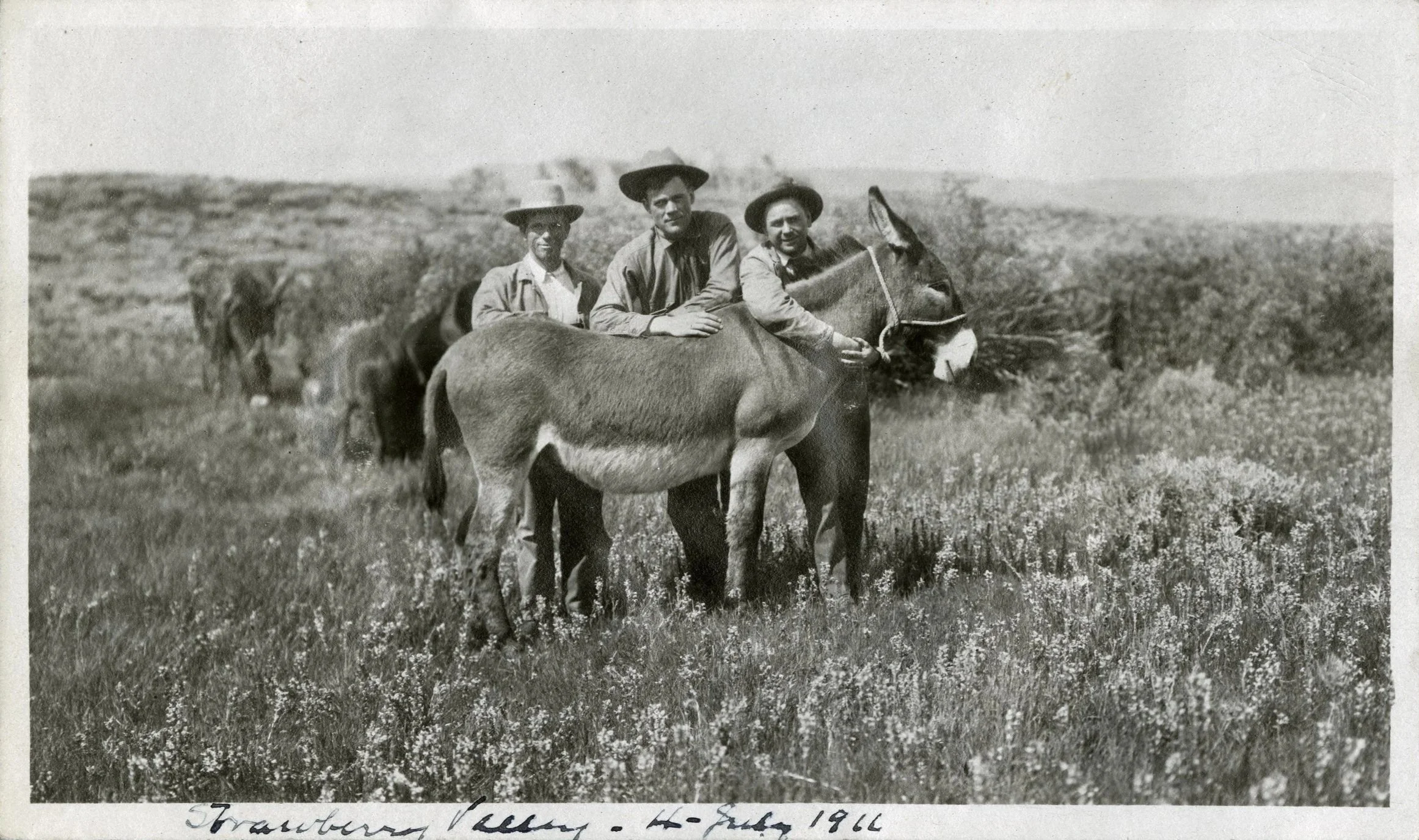
Photograph of three prospectors with a burro, Strawberry Valley (Nev.), July 4, 1911
-
![]()
Photograph of Jack Tuck and burro, Las Vegas, 1904
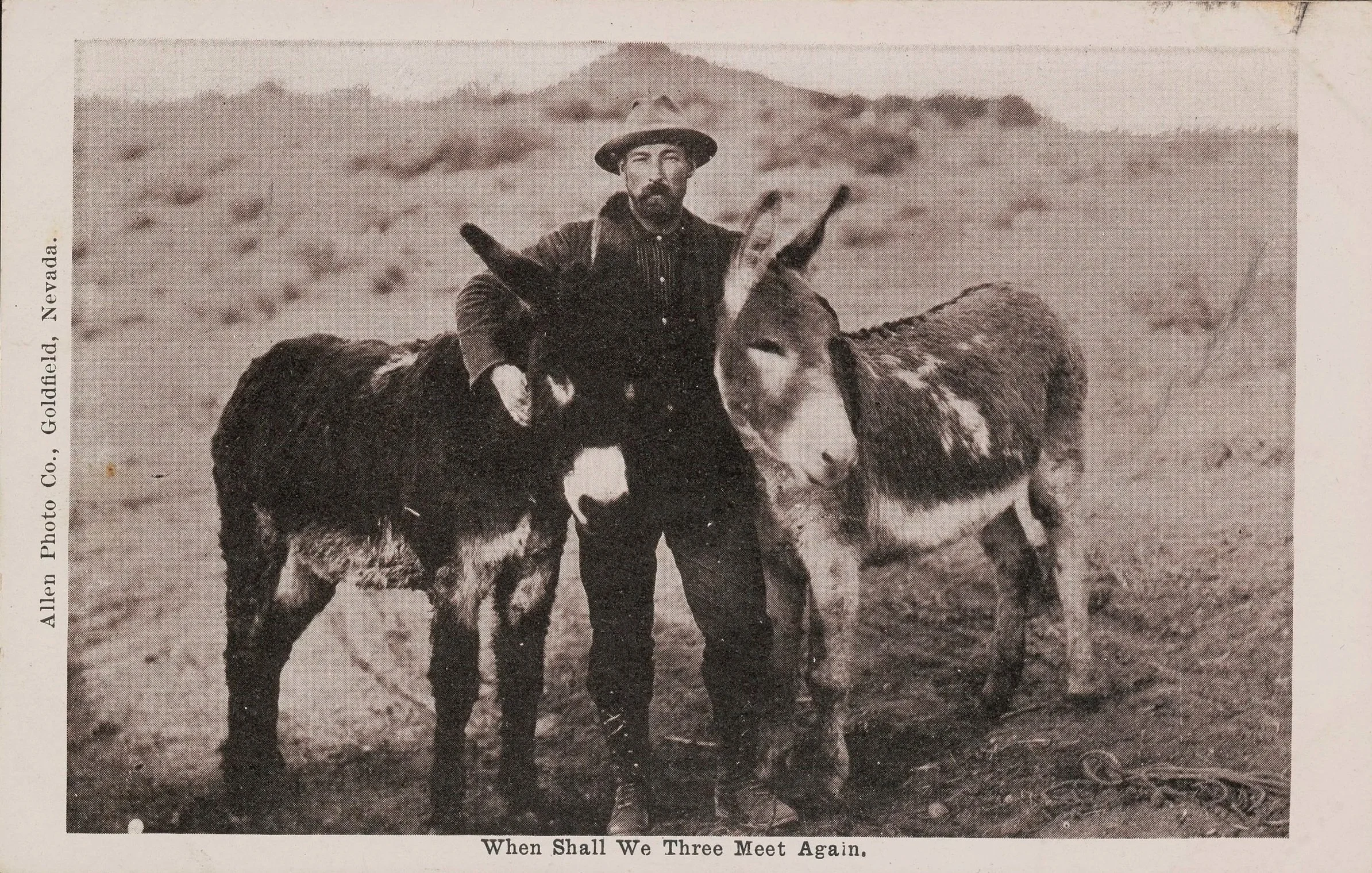
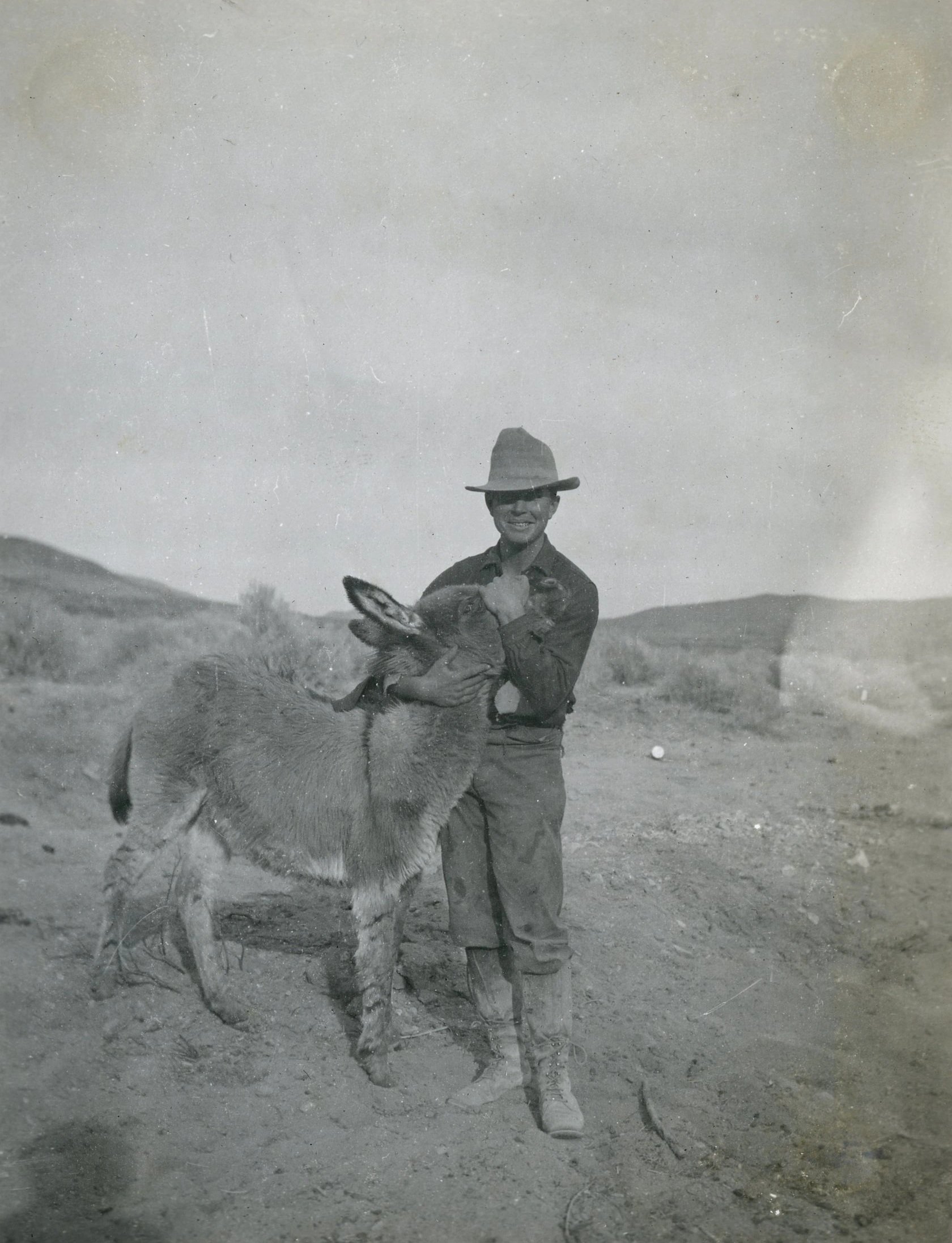
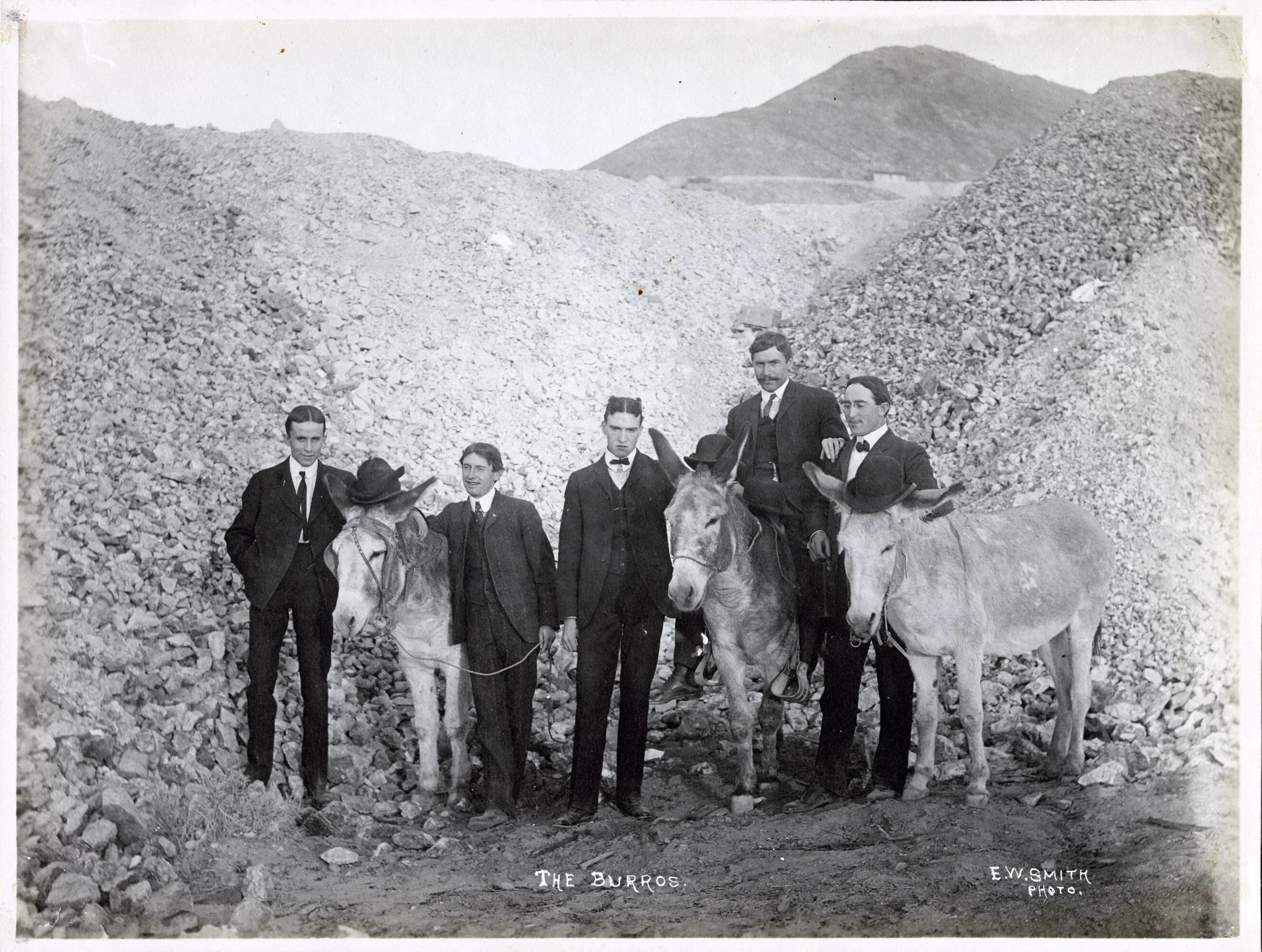
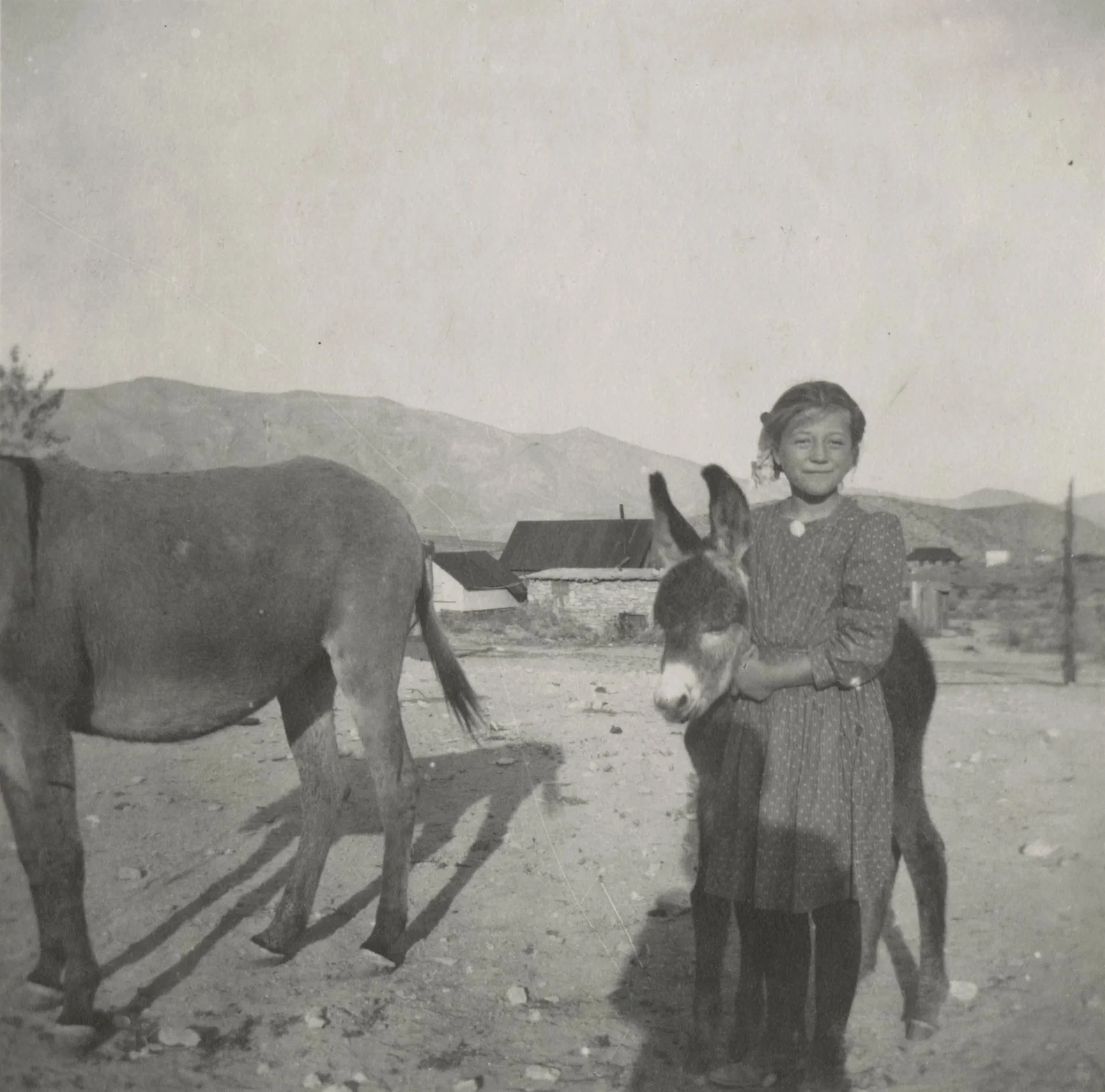
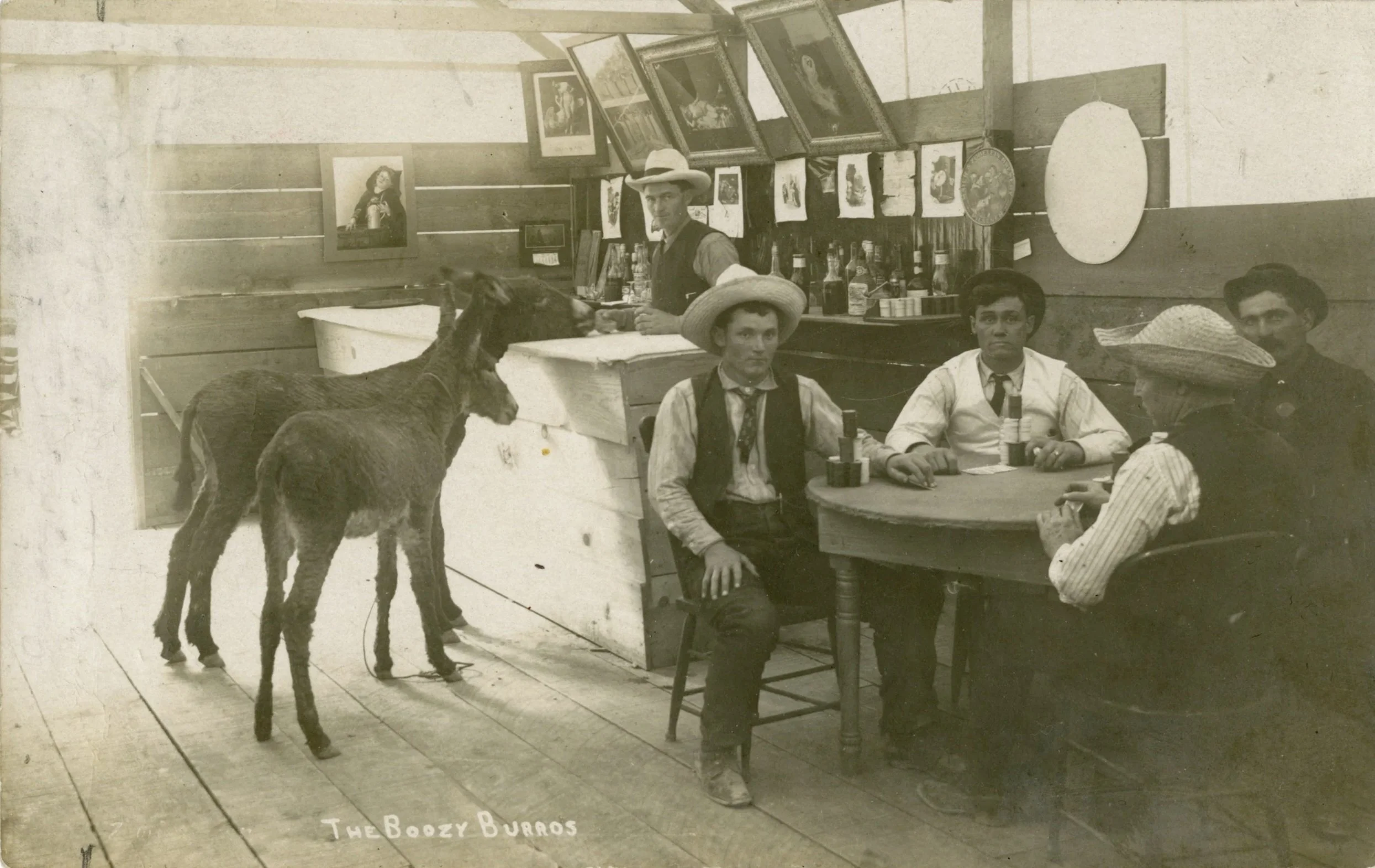
All images above courtesy of UNLV University Libraries, Special Collections and Archives
Becoming Wild
As mining operations declined and motorized vehicles became widespread in the early 1900s, most working donkeys throughout the West were simply no longer needed. In the wake of a changing world, many were turned loose, while others escaped or were abandoned, eventually forming free-roaming herds across the desert and mountain regions of California, Nevada, Arizona, Utah, and beyond.
Having evolved in arid environments, these donkeys, now called wild burros, excelled at surviving on sparse desert vegetation and traveling long distances between water sources. Combined with few remaining natural predators, wild burro populations grew steadily in the years that followed, and together with wild mustangs, they became an iconic part of the American West.
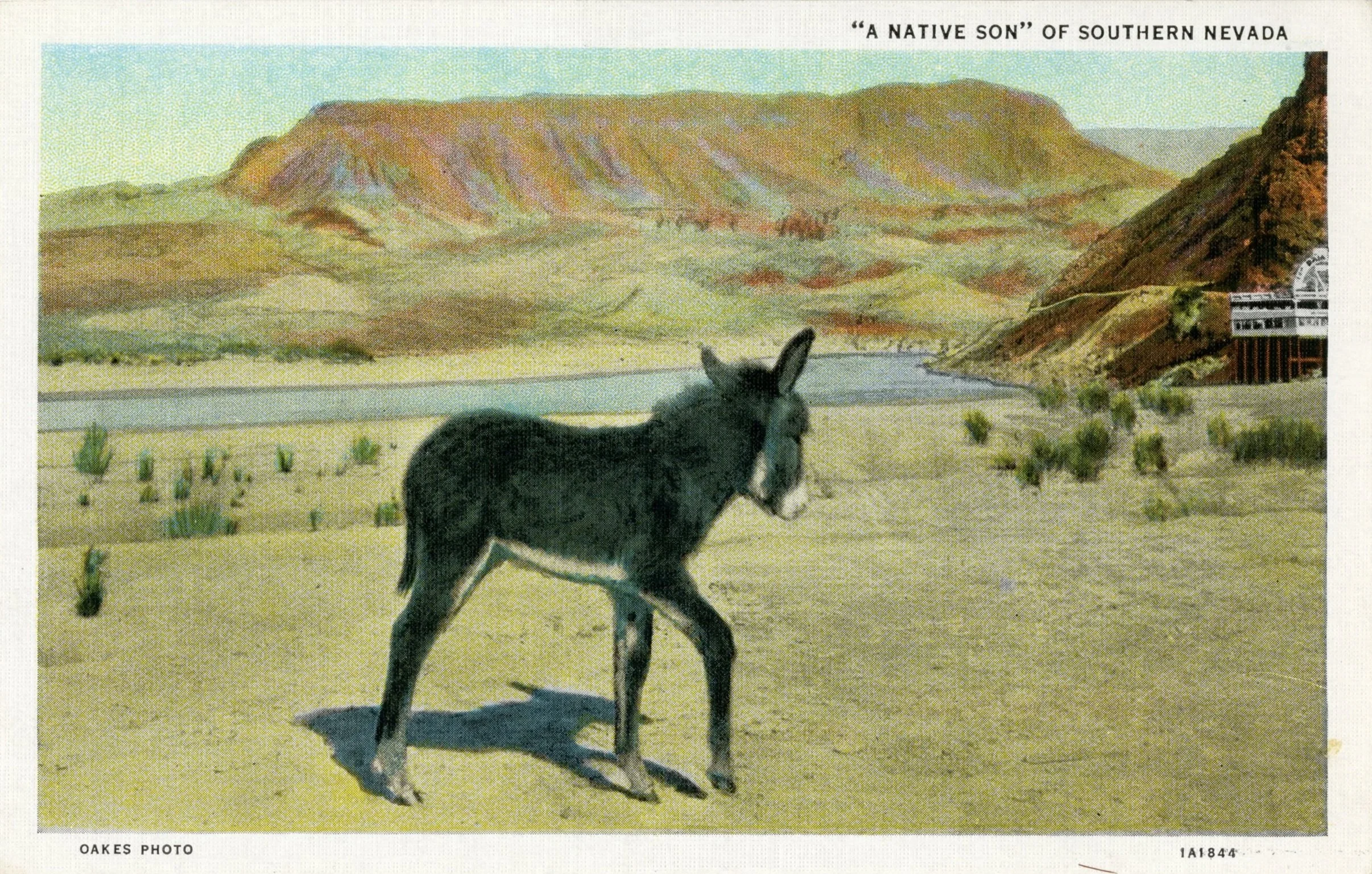
Postcard of wild burro, Nevada, ca. 1930s. Written on back of postcard: "The burro is one of the pioneer characters of the old West. Though burro pack outfits are still to be seen on the desert, the day of the burro is passing, along with the gunman, the cowboy and Indian, and other historic features of by-gone days. Like the Indians, he may still be seen, a figure from the romantic past. With his echoing bray, his hardihood, his sleepy good nature and homely appearance, he is an extremely interesting local character."
Courtesy of UNLV University Libraries, Special Collections and Archives.
From Nuisance to Living Symbol
As the West continued to develop, wild burros increasingly came into conflict with ranchers and government land management agencies concerned that they were competing with livestock and native wildlife for limited forage and water. During this time, thousands of wild burros were rounded up, captured by mustangers for commercial sale and slaughter, or shot in efforts to reduce their numbers.
Even though donkeys were no longer part of most Americans’ daily lives, reports of these practices outraged the public and fueled a grassroots campaign to protect wild horses and burros from disappearing. Following nearly two decades of public advocacy, Congress responded by passing the Wild Free-Roaming Horses and Burros Act in 1971, granting wild horses and burros federal protection and declaring them "living symbols of the historic and pioneer spirit of the West." With the passage of this Act, the Bureau of Land Management (BLM) and U.S. Forest Service became responsible for protecting wild horses and burros and managing their populations at sustainable levels on designated public lands.
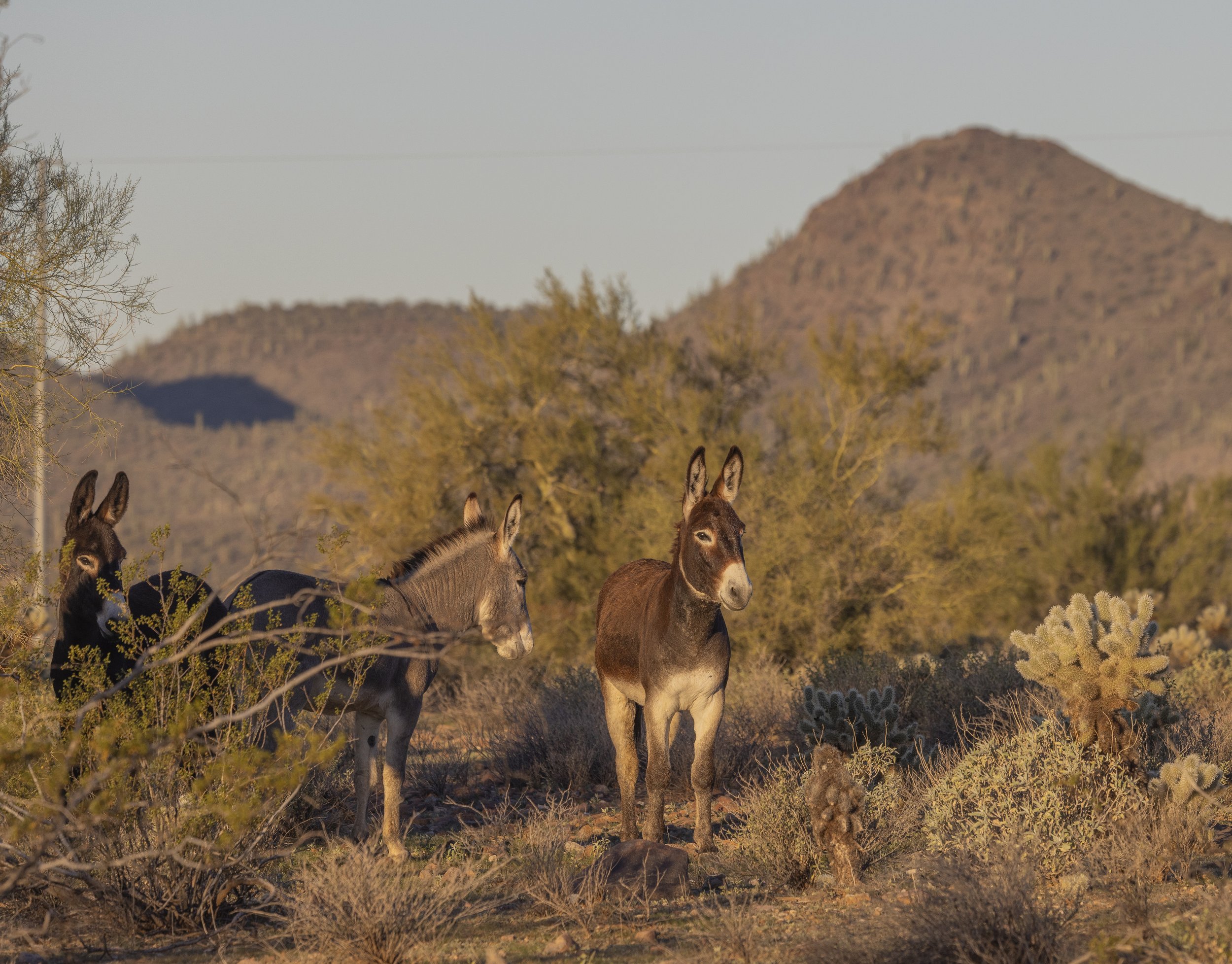
Wild burros in the Arizona desert, 2026.
Wild Burros Today
Today, wild burro management remains a complex balancing act. In the decades since the Act was passed, federal protections allowed wild burro populations to grow from an estimated few thousand in 1971 to almost 24,000 in 2026. Across the desert regions of California, Nevada, Arizona, Utah, and Oregon, roughly 50 Herd Management Areas (HMAs) have been established with the goal of maintaining wild burro populations in each area at levels biologists determine the land can sustainably support. When populations exceed those levels, routine gathers are scheduled to remove excess burros from the range and relocate them to off-range holding facilities. From there, the burros are freeze-branded for permanent identification, provided with basic veterinary care, and made available for adoption or sale to qualified private homes.
In practice, however, managing wild burro populations has proven far more difficult than originally envisioned. Left unchecked, wild burro populations can double in as little as four years, often growing faster than gathers and adoption efforts can keep pace.
As a result, the entire management system has come under increasing strain. Budget and staffing cuts, combined with the growing number of burros entering holding facilities, have created significant processing backlogs, leaving many animals waiting months to years before they are even available for adoption. At the same time, gathers have struggled to keep up with population growth, leaving many HMAs above sustainable population levels. This has placed increasing pressure on fragile desert ecosystems and led to more burros being involved in vehicle collisions as they search farther for food and water.
Finally, limited modern demand for donkeys, combined with their long lifespans and the additional training needed to gentle wild burros, has also made it difficult to find homes for the growing number of animals entering the system. Today, roughly 3,000 burros remain in holding facilities across the west awaiting processing and adoption, while another nearly 24,000 are estimated to be living in the wild.
Together, these challenges reveal a sobering truth, that even with half a century of federal protection, donkeys remain caught up in a complex cycle of population management rather than regaining the meaningful place they once held in our lives.
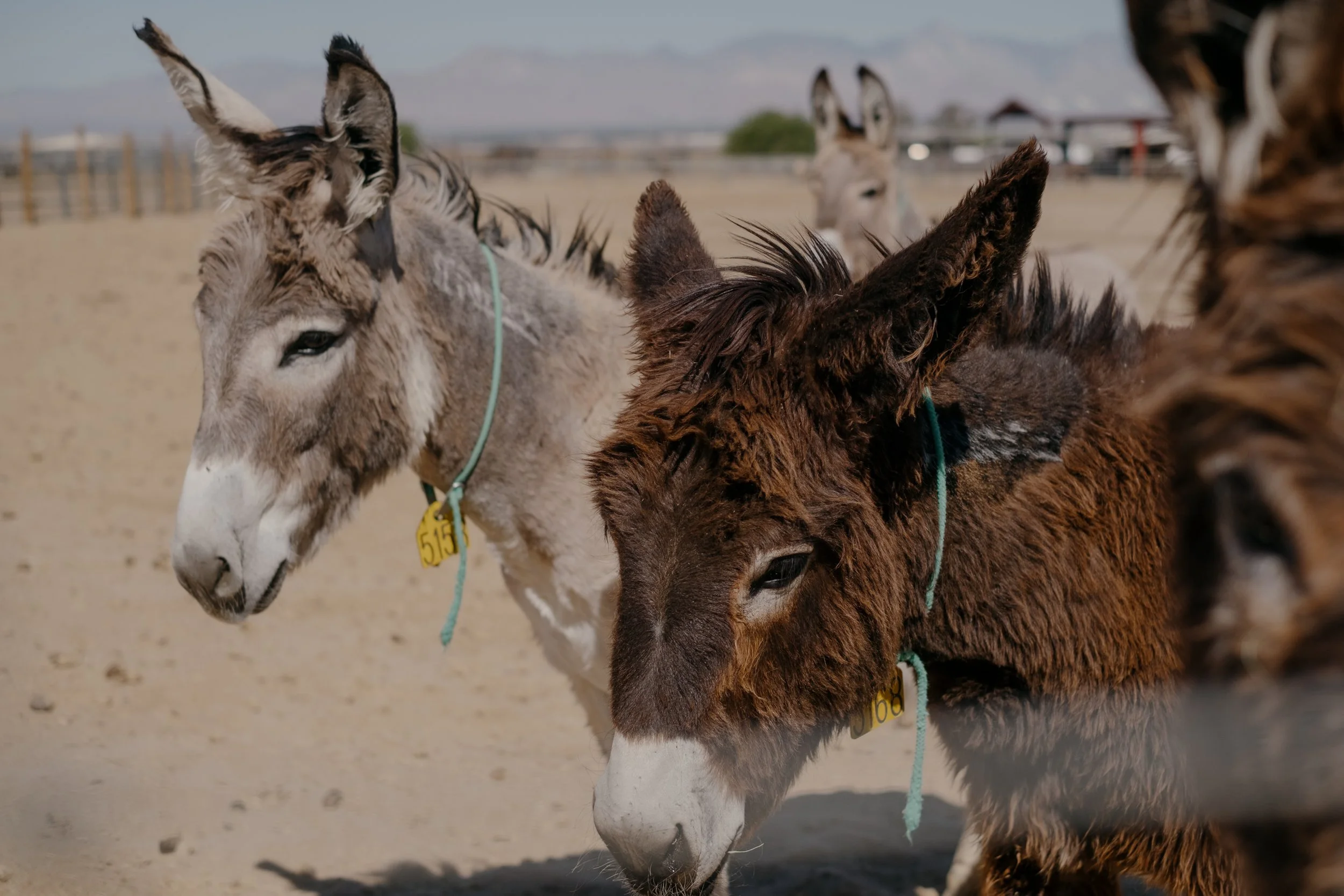
Wild burros awaiting processing and adoption at the Ridgecrest Regional Wild Horse and Burro Corrals in Ridgecrest, California, 2026.
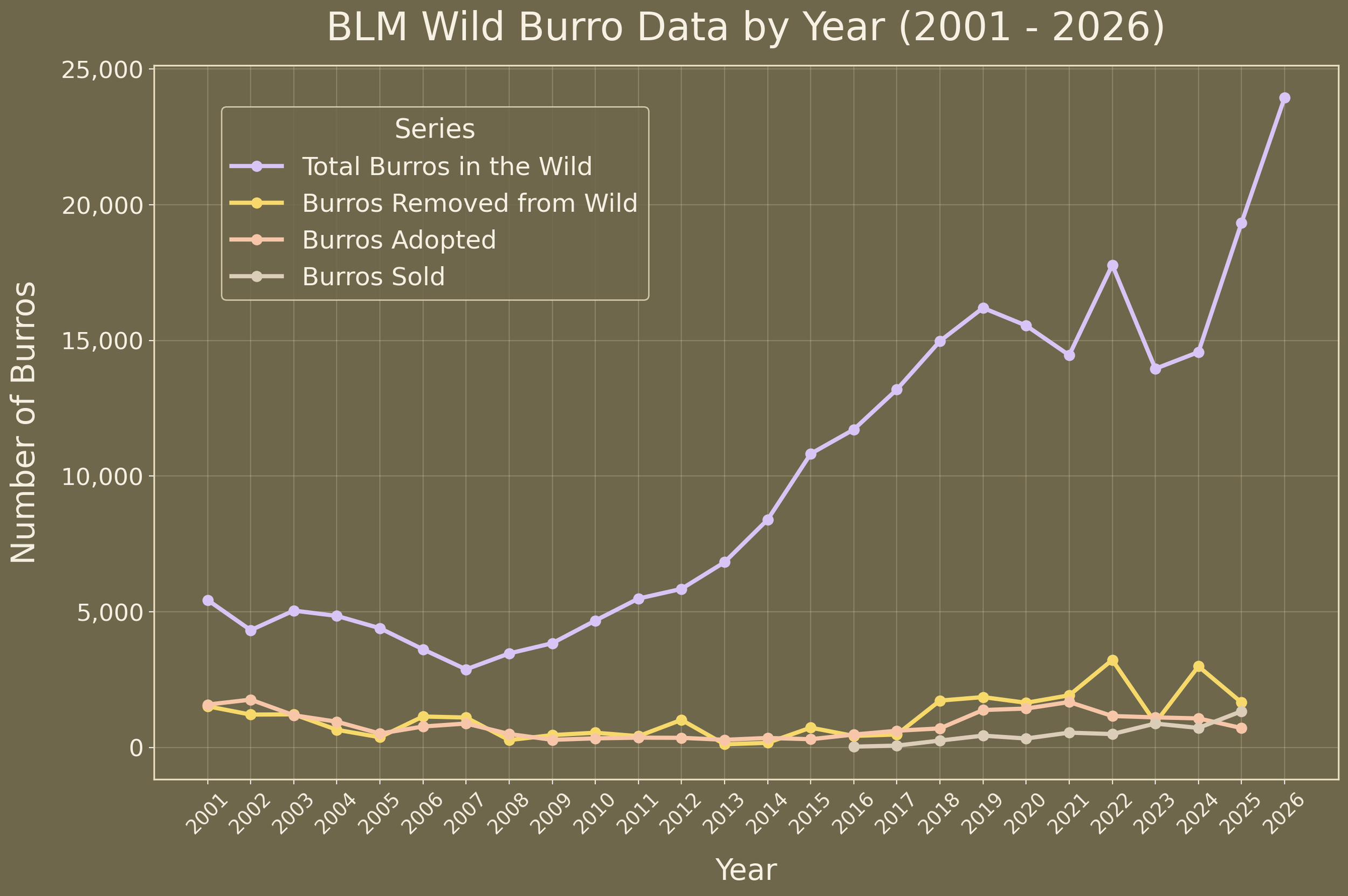
Plot of wild burro data by year from 2001 through 2026, including total number of burros in the wild (living in the wild in BLM herd management areas), burros removed from the wild through gathers, and burros adopted and sold. Reconstructed from Public Land Statistics data published annually by the BLM (Source: https://www.blm.gov/about/data/public-land-statistics).
Rediscovering Donkeys
While horses have remained part of modern society through recreation, sport, ranching, and companionship, donkeys have largely disappeared from everyday life. Yet the qualities that once earned them such a meaningful place in people's lives, their intelligence, curiosity, athleticism, and unwavering companionship, have never changed.
With wild populations continuing to grow and holding facilities increasingly overburdened, the future of wild burros depends not only on increasing adoptions. It also depends on giving more burros access to essential training to transition back into our lives, and helping more people rediscover donkeys as the adventure partners, trusted companions, and valued members of our communities they can become. In doing so, we can offer more of these incredible animals a second chance at living the lives they deserve.